The Empty Wall: Britain's Film Posters and the Lost Art of the Public Invitation
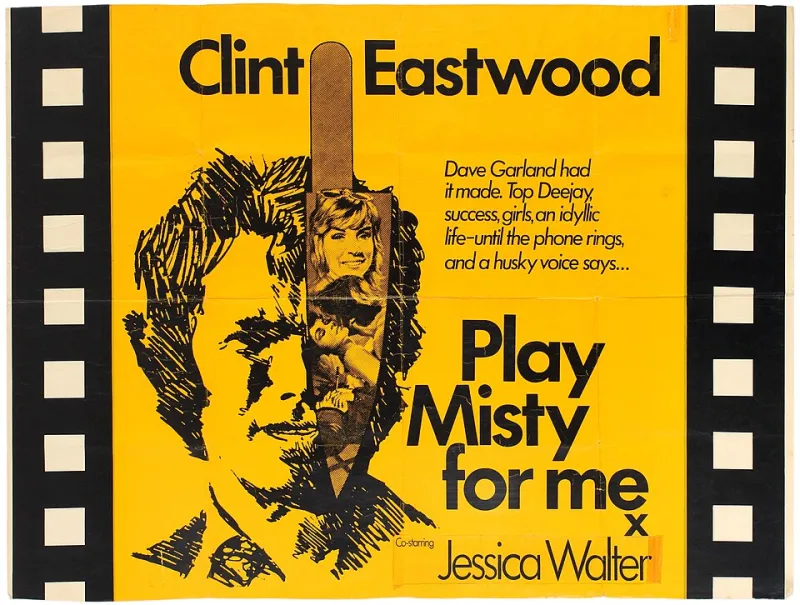
Photo: Walter Eastwood, Public domain, via Wikimedia Commons
In a streaming library, a film arrives as a tile. It is cropped, compressed and placed beside dozens of others, all competing for the same momentary glance. In a cinema, a film used to arrive as an invitation: a large sheet of paper on a wall, designed to be read at walking pace, making a claim before a single frame had been projected. The difference is not sentimental. It is structural. Britain's film culture has quietly surrendered one of its most public forms, and the loss is visible in every foyer that now runs a loop of advertisements where a poster wall once stood.
The Quad as a Public Form
The British quad is a landscape sheet, roughly thirty by forty inches, and it was designed for the street rather than the screen. Its proportions suited the sites where films were announced: the side of a bus, the wall of an Underground station, the front of a cinema. Post-war British cinema understood that the poster was part of the film's public life. Ealing comedies, Hammer horrors and the early Bond cycle all produced key art that did more than list names. It set a tone, proposed a audience and gave the film a visual identity that could travel without the film itself.
That identity was not incidental. A poster is a piece of design criticism in advance. It decides what matters: a face, a landscape, a gesture, a colour. It tells the viewer what kind of attention is being asked for. The best British quads were not merely illustrated advertisements; they were arguments about tone. They could be wry, ominous, romantic or severe, and they assumed a public that would read them at a glance and carry them home in memory.
The Grid and the Flattened Image
Streaming did not invent the indifferent image, but it has made indifference the default. Platform grids reward recognition over distinction. Thumbnails must survive at a fraction of their intended size, so they tend toward the same grammar: a face in close-up, a skyline, a muted teal and orange palette, a sans-serif title that is often illegible on a phone. The result is a visual vocabulary of interchangeable urgency. A British film with a modest budget is encouraged to look like every other film in the row, because the algorithm rewards familiarity and the viewer is given no time for anything else.
This is not simply a marketing problem. It changes the terms on which a film enters public life. When the first encounter is a thumbnail, the film is presented as inventory rather than event. The distributor designs for the tile first and the poster second, if at all. Cinema chains, meanwhile, replace printed display with digital screens that cycle through advertising, reducing the poster to a slide in a loop. The wall becomes a surface for messages rather than a place for looking.
What the Foyer Used to Do
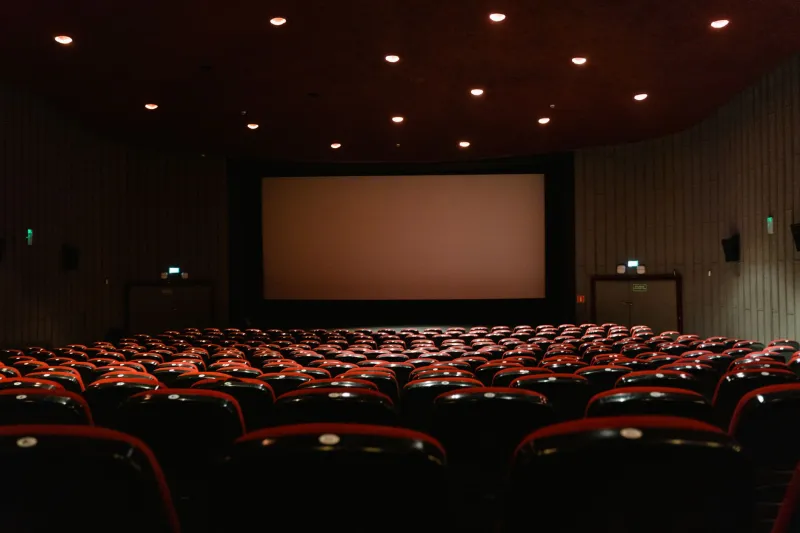
The cinema foyer was once a threshold with a programme. Poster walls told you what was coming, what had just arrived and what kind of cinema this was. Independent venues such as the Tyneside Cinema, Broadway in Nottingham, Chapter in Cardiff and the Glasgow Film Theatre still understand this, but even there the pressure to monetise wall space is real. A poster needs stillness and scale. It needs to be seen at eye level, at walking pace, without a countdown timer.
A proper view begins before the ticket is bought. The poster is the first review, the first frame, the first public sentence about a film. To treat it as decoration is to misunderstand what it does. It creates expectation, frames attention and gives a film a life beyond the release date. When that life is reduced to a grid, the film is diminished before it has been seen.
A Practical Argument for 2026
There is no need for nostalgia here. The poster can be reclaimed without pretending the internet does not exist. Distributors should commission original key art and budget for it properly, rather than treating it as a late-stage asset derived from a trailer still. They should test designs at quad size, print physical copies and supply them to independent cinemas who will actually display them. Cinemas should protect wall space, display posters at eye level and resist the temptation to turn every surface into a revenue stream. Public funders and film hubs could do more to support exhibition standards, not only production.
The British film poster was never a minor accessory. It was a public invitation, and it assumed a public worth inviting. In 2026, with attention fragmented and release windows uncertain, that invitation matters more than ever. A film that cannot announce itself properly has already lost part of its audience. The wall is empty. It is worth filling again.