A Country Unseen: Close-Up Openings and the Geography of British Cinema
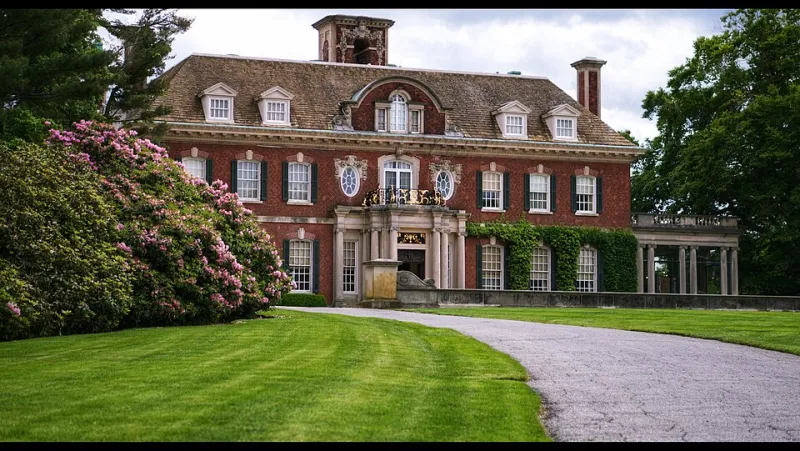
Photo: SavidgeMichael, CC BY 4.0, via Wikimedia Commons
There is a familiar way into a certain kind of contemporary British film. A face fills the frame. Someone is speaking, perhaps over the top of another conversation, perhaps into a phone. We are in a car, a kitchen, a hospital corridor or a flat whose dimensions we must guess from the edge of a doorframe. Only later, if at all, does the film step back and tell us where we are. The effect can be immediate and persuasive. It can also be a way of withholding something that cinema once took for granted: a sense of place.
This is not a complaint about close-ups. The close-up is one of the medium's great instruments, and British cinema has produced performers whose faces can carry an entire argument in a single held shot. The issue is not intimacy itself but its status as a default. When a film begins tight and stays tight, the audience is asked to assemble the world from hints. Sometimes that is the point. More often it is a habit, and habits in form have consequences.
The first look
An opening shot is a promise about what kind of film is to follow. A wide exterior can feel old-fashioned, even touristic, as though the director were clearing their throat before the real business of performance begins. A close-up feels modern, immediate, psychologically alert. It says that character is action and that the world is whatever presses in on the person at the centre of the frame.
That is a legitimate cinematic position. But it is not the only one, and it should not be the unexamined one. The establishing shot, at its best, is not a postcard. It is an orientation. It tells us what the characters must cross, what institutions surround them, what weather they live inside and how far the next town might be. It establishes scale, and scale is often a social fact. A tower block, a coastline, a ring road, a moor and a terraced street are not interchangeable backgrounds. They are part of the argument.
British cinema has a long and varied relationship with place. The documentary movement, the postwar social-realist tradition and the regional filmmaking that followed all understood that landscape and built environment are not decoration. They are conditions. To begin in close-up is to choose to postpone that understanding, and sometimes to abandon it altogether.
Geography as argument
A wide shot can be clumsy when it is used merely to announce a location. But when it is used well, it does something that dialogue cannot easily replicate. It shows us the distance between people and power. It shows us the shape of a town before we meet the people who are trapped in it or trying to leave it. It gives the close-up something to push against.
The loss of the exterior is therefore not simply a loss of pictorial pleasure. It is a loss of spatial grammar. If we never see the street, the estate, the valley or the coast, we may still follow the plot, but we are less able to judge what the plot costs. A journey becomes a cut. A neighbourhood becomes a set of interiors. A country becomes an accent and a prop.
This matters for a national cinema because a country is not only a collection of stories. It is also a collection of places, and films are one of the ways a society sees itself. That does not mean every British film must be a landscape film, or that rural imagery is more authentic than urban imagery. It means that the question of where a story happens should be treated as a creative question, not an inconvenience to be solved by another tight two-shot.
The close-up's legitimate claim
None of this would matter if the close-up were merely one option among many. The difficulty is that the tight opening has become a sign of seriousness. It suggests that the film is about people rather than scenery, psychology rather than geography. In an industry under pressure, it is also practical. Interiors are easier to control. Exteriors cost money, time and permits. Weather is unpredictable. A production that opens on a face can postpone the logistics of a street, a square or a hillside until the schedule allows.
There is also the influence of television, where immediate engagement is prized and where the small screen can make the wide shot feel less commanding. Streaming has intensified the pressure to begin with a hook. A face is a hook. A horizon is not.
But cinema's distinctiveness lies partly in its capacity for scale. The wide image is not an admission that the audience is bored. It is a way of saying that the story takes place in a world larger than the room. When that world is withheld for too long, the film may feel precise and intense, but it can also feel airless, as though the characters had been placed in a sealed container for our inspection.
What the proper view asks
A proper view does not demand that every film begin with a sweep across the rooftops. It asks instead that form be chosen rather than inherited. If a film wants to start in close-up, it should know what it is postponing and why. It might later grant us a wide shot that lands with real force because we have earned it. It might use sound, transport, maps, windows or the movement of bodies to keep geography alive. It might treat place as structure rather than scenery.
Critics and audiences can help by noticing the difference between a film that is intimate and a film that is merely enclosed. The distinction is not always easy, but it is worth making. British cinema has never been short of faces. It has sometimes been short of horizons. Recovering the establishing shot is not about nostalgia for a older grammar. It is about restoring a fuller sense of what a story is: not only who speaks, but where they stand, and what that place makes possible or impossible.
If a national cinema stops showing the country, it does not stop being national. It simply becomes less able to show us the country as a place to be lived in. That is a loss worth naming. The first shot is never only the first shot. It is the film's opening account of the world.