The Copy in Hand: Physical Media and the Terms of Proper Viewing
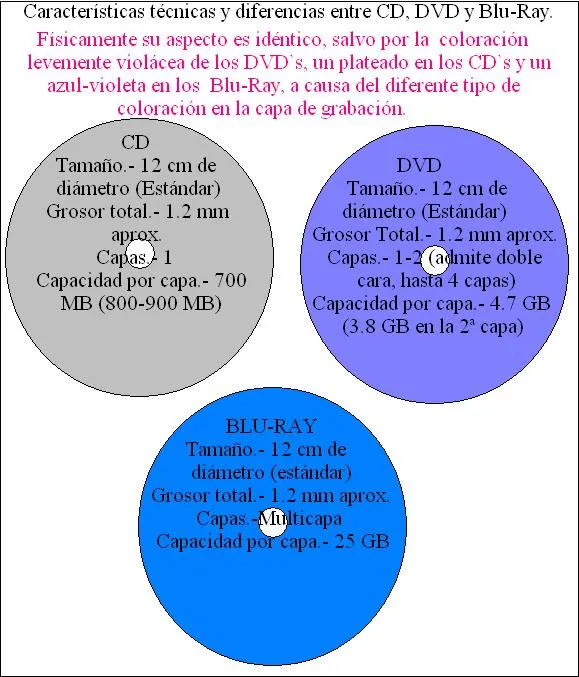
Photo: Juana Beatriz Fumasoni, CC BY-SA 4.0, via Wikimedia Commons
A film on a streaming service is present until it is not. The warning that a title is leaving soon is now a familiar piece of interface furniture, but it describes something more consequential than a scheduling quirk. It marks the difference between access and possession. For UK viewers who care about seeing a film properly, and seeing it again on terms that do not change without notice, the physical release is not a sentimental object. It is a practical instrument.
The Catalogue Is Not a Library
Streaming has trained a generation of viewers to think of film history as a menu. That menu is curated by rights agreements, territorial deals and commercial priorities that have nothing to do with the shape of a director's career or the health of a national cinema. A title can be available on a Monday and gone by the weekend. A version can be replaced by another master. A subtitle track can be altered, a ratio can be reframed, a soundtrack can be remixed. None of this is necessarily malicious. It is simply the nature of a distribution system in which the copy is never quite yours.
The physical disc does not solve every problem. It can be mastered badly, pressed from an outdated transfer or burdened with unhelpful revisions. But it does settle one question: what is in the box is what you can watch. In 2026, with catalogues shifting more often than many viewers expect, that settlement matters. It is the difference between a temporary window and a copy in hand.
What a Disc Actually Settles
A disc is often described as a collector's item, which is a way of making it sound unnecessary. The more useful description is a fixed edition. It carries a specific transfer, a specific sound mix and a specific set of subtitles. It may carry commentaries, essays, short films and archival material that give the viewer a context not available on a bare streaming listing. Those extras are not decoration. They are part of the film's public record.
The practical value is clearest when a film is difficult. Older British titles, independent productions and foreign-language work often arrive on disc through small labels that have done the work of locating materials, commissioning restorations and clearing the rights. The viewer benefits from that labour even if they never read the booklet. A good disc is an argument about how a film should be seen, made concrete.
The UK's Boutique Ecology
Britain has an unusually strong ecosystem of boutique labels. The BFI, Arrow, Eureka, Second Run, Indicator and Radiance, among others, have built catalogues that mix canon titles with neglected work. Their releases are not uniform. Some are lavish limited editions; others are plain, well-produced editions at a reasonable price. What they share is a commitment to presenting films with care, and a willingness to work at the edges of the market rather than only at its centre.
This ecology is fragile. It depends on rights, restoration funding, manufacturing capacity and a customer base large enough to justify the risk. It also depends on viewers who are willing to buy a copy rather than assume that a streaming listing will always be there. The UK's label culture is often discussed in terms of collectability, but its real achievement is custodial. These companies keep films available in a form that can be examined, compared and trusted.
Region Coding and the Practical Viewer
The UK sits in Blu-ray Region B and DVD Region 2. That means some overseas releases will not play on a standard British player, and some British releases will not play abroad. Region coding is a nuisance, but it is also a map of rights. It explains why a film can be available in the United States and unavailable here, or why a British label can release a title that no American label has touched.
For the practical viewer, the answer is usually simple: check the region before buying, and consider a region-free player only if imports are likely to become a habit. 4K UHD discs are generally region-free, though Blu-ray extras and accompanying discs may not be. The point is not to turn geography into a hobby. It is to recognise that physical media operates in a world of territorial licences, and that a little attention at the point of purchase prevents a great deal of frustration later.
Against the Shrine
There is a version of the physical media argument that deserves scepticism. It treats the sealed edition as an investment, the shelf as a shrine and the viewer as a custodian of shrink-wrap. That is not a defence of film culture. It is a defence of merchandise. Discs are made to be played. They take up space, they cost money and they carry an environmental footprint that should not be waved away.
The proper case is more modest. Physical media is one of the few ways a viewer can be sure that the film they saw is the film they can see again. It is a practical answer to a practical problem: the instability of the streaming catalogue and the quiet mutability of the digital copy. It is not nostalgia for a lost age of video shops. It is a recognition that some films deserve a settled form.
A Settled Copy
None of this means every film must be bought. Most viewers will continue to rely on streaming for convenience, and that is reasonable. But for the films that matter to them, the ones they want to study, show to others or simply revisit without wondering whether the version has changed, the disc remains the most reliable option. It is not a sentimental attachment to plastic. It is a way of keeping the terms of the view.
A proper view depends on more than a good screen and a quiet room. It depends on being able to see the film that was made, in the form in which it was released, without the ground shifting beneath it. Physical media does not guarantee that. But it comes closer than anything else on the shelf.