The Default Is Not the Film: Reclaiming the Proper Picture at Home
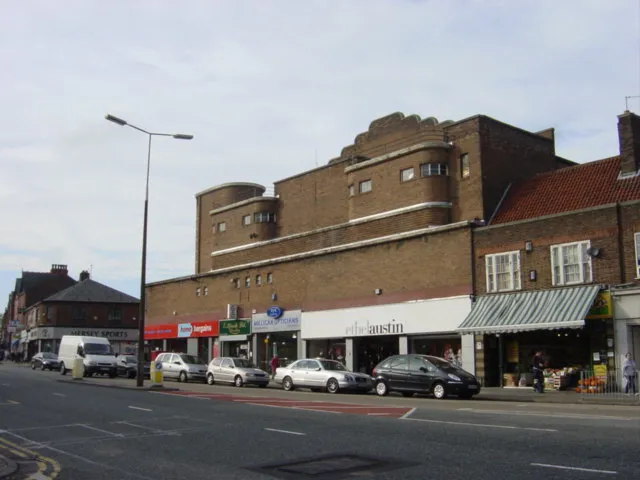
Photo: Shixart1985, CC BY 2.0, via Wikimedia Commons
A new television is installed in a British living room. The delivery team has gone, the cardboard has been folded away, and the set is showing a loop of brightly coloured wildlife footage. It looks impressive. Then a film begins, and something is wrong. The movement is too fluid, the faces too sharp, the shadows too clean. A costume drama appears to have been shot on a camcorder. The problem is not the panel. It is the default.
The Showroom Is Still in the Room
Televisions are not shipped in the settings that suit a darkened living room in Leeds or Cardiff. They are shipped in the settings that survive a brightly lit shop floor in a retail park. Manufacturers compete for attention in Currys, John Lewis and similar spaces where sets sit side by side under harsh lighting. A picture that looks calm and accurate at home can look dull next to a neighbour set to maximum brightness. So the defaults are tuned for spectacle: vivid colour, aggressive contrast, artificial sharpness and motion processing that makes every camera pan look like a sports broadcast.
This is not a conspiracy. It is retail economics. The difficulty is that the showroom does not end when the set is delivered. Those settings remain, and for many viewers they become the picture. The film is not being watched as it was finished; it is being watched through a sales demonstration that never stops.
What the Processing Actually Does
Motion smoothing is the most conspicuous offender. It goes by many names — MotionFlow, TruMotion, Auto Motion Plus, Intelligent Frame Creation — but the principle is similar. The television estimates new frames and inserts them between the original ones, raising the apparent frame rate. A film shot at 24 frames per second is pushed towards 50, 60 or 120. The result is smoother movement, but also the removal of the small gaps and slight judder that give cinema its particular rhythm. The so-called soap opera effect is not really about soap operas. It is about a television deciding that the film’s cadence is a fault to be corrected.
Oversharpening works in a different way. It adds halos around edges and exaggerates fine detail, making faces look brittle and textures look gritty in the wrong sense. Noise reduction, meanwhile, can erase film grain — the very texture that carries information about how the image was captured. Dynamic contrast pumps up highlights and crushes shadows, so that a deliberately murky night scene becomes either flat or glaring. A cool colour temperature makes the picture look brighter in a shop, but it turns skin tones waxy and daylight scenes icy.
Texture Is Not Noise
There is a persistent assumption that the cleanest image is the best one. It is not. Film grain, shallow focus, motion blur and restrained contrast are expressive tools. They tell the viewer something about the material, the period, the mood and the director’s intentions. A television that removes them is not improving the film; it is rewriting it. The proper view does not require an obsequious picture. It requires a picture that does not argue with the source.
This matters especially in the UK, where viewers move between Freeview, BBC iPlayer, ITVX, Channel 4 and subscription services. Each source may arrive with different frame rates and compression. A television set to smooth everything will smear those differences into a single house style. A television set to a neutral base will let the material speak for itself, even when the material is imperfect.
A Short Reclamation
The good news is that reclaiming the image does not require a calibration hobby. Most viewers can make a substantial improvement in a single evening, without probes or spreadsheets.
First, look for a Filmmaker Mode or a Cinema/Home Cinema preset. Many sets now include one, and it usually disables the worst processing. If there is no such mode, choose the warmest, least saturated preset available and work from there.
Second, turn off motion smoothing. The name varies by manufacturer, but the setting is usually found under Picture, Advanced Settings or Motion. Do not simply reduce it to a low setting if the option is available; switch it off and judge the result over a few scenes.
Third, set sharpness to its neutral point. On many televisions that is zero, not the midpoint. Reduce or disable noise reduction and edge enhancement. Turn off dynamic contrast and any eco-mode that adjusts the picture according to the room. Set colour temperature to Warm or Warm 2. Check that the aspect ratio is set to the original or Just Scan, so that the image is not stretched or cropped.
None of this guarantees perfection. Panel uniformity, room lighting and source quality all matter. But it returns the television to something closer to a window rather than a collaborator.
The Limits of the Argument
There are cases where processing earns its place. Sport, news and some live broadcasts can benefit from smoother motion. A bright room may require a different preset from a darkened one. The argument is not that every enhancement is illegitimate. It is that the default should not be an exaggeration. A film should begin from a neutral base, and the viewer should be the one who chooses to depart from it.
Manufacturers could make this easier. They could ship Filmmaker Mode as the default, or at least explain the retail settings on first installation. They could stop giving the same processing different names in different markets. But the commercial pressures of the shop floor are unlikely to disappear. In the meantime, the responsibility falls on the viewer — not as a hobbyist, but as someone who wants to see the film rather than the television’s opinion of it.
The set is not the film. The default is not the film. A proper view begins when the viewer takes the picture back.