The Twenty-Minute Debt: Why the Feature Should Start When It Says

Photo: Sue Adair, CC BY-SA 2.0, via Wikimedia Commons
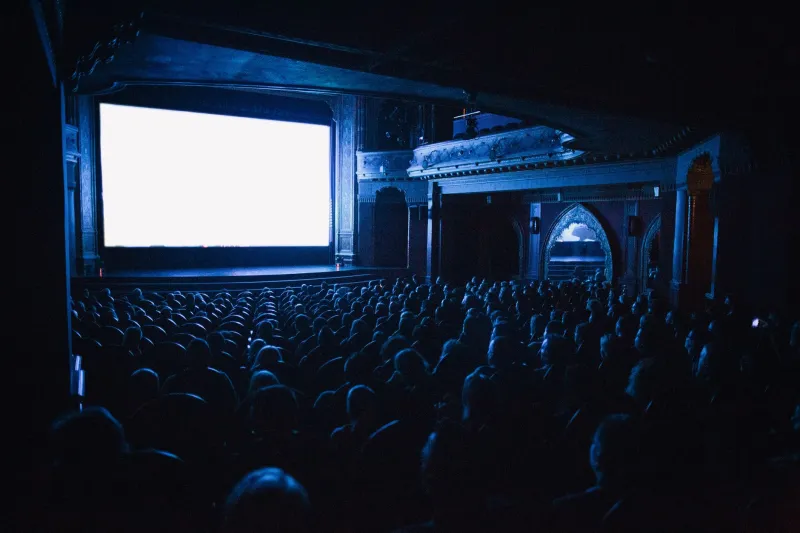
There is a particular kind of silence that falls over a British cinema auditorium at the advertised start time. The lights have dimmed, the audience has settled, the last of the popcorn has been opened — and then the screen fills with a car commercial. For the next fifteen to twenty minutes, the evening belongs to somebody else. The feature, the reason everyone came, waits its turn like a guest who has arrived too early for dinner.
This is now routine. It is not confined to one chain, one city or one kind of cinema. The advertised time has become a soft opening, a beginning before the beginning. The film itself starts when the advertising reel has finished, and the audience is expected to absorb the difference without complaint. The arrangement is profitable, no doubt. It is also, in a modest but meaningful way, disrespectful.
A Promise, Not a Guideline
A published start time is a promise. It tells the viewer when to arrange childcare, when to book a table, when to leave work, when to catch the last train. It is the sort of small, practical contract that makes a public evening possible. When cinemas routinely pad that time with advertising, they are not merely adding a pre-show; they are quietly rewriting the terms after the ticket has been sold.
The usual defence is that advertising keeps ticket prices down. There is truth in this. Cinema advertising revenue is real, and British exhibitors operate in a difficult market. But the defence has limits. If the advertised time is 7.30pm, the customer has a reasonable expectation that the feature will begin at 7.30pm, not at 7.48pm. Charging for a ticket and then claiming twenty minutes of the buyer’s evening as an additional revenue stream is not a discount. It is a transfer.
How the Reel Grew
The cinema advert is not a new invention. In the 1980s and 1990s, British audiences were accustomed to local advertisements — garages, curry houses, double-glazing firms — followed by a handful of trailers. The reel had a certain scruffy charm. It was part of the evening, but it was also clearly a preamble. The feature remained the main event.
What has changed is scale and precision. Digital projection made it easy to programme long, nationally sold advertising blocks. The old local advert gave way to the branded campaign. The trailer selection grew longer, and the distinction between advertising and coming attractions blurred. The result is a pre-show that can run to twenty minutes or more, and a feature start time that has become a matter of guesswork.
This is not a story of decline from some golden age. The old reel could be tedious too. But the balance has shifted. The preamble now routinely outlasts the patience of the audience, and the feature arrives as an afterthought to its own evening.
The Curatorial Problem
There is a second issue, beyond length. The trailer selection itself is often poorly curated. A long reel of trailers can spoil the film it is promoting, flatten the mood of the feature that follows, or simply exhaust the viewer before the opening titles. A well-chosen trailer is an art; a wall of them is a blunt instrument.
Cinemas have an opportunity here. A shorter, sharper selection — two or three trailers, chosen with some regard for the film being screened — would serve the audience better than a generic block. It would also restore a sense of occasion. The lights go down, the trailers play, the feature begins. That is a rhythm worth protecting.
An Honest Start Time
What would a proper answer look like? It need not be radical. Cinemas could publish two times: doors open, and feature starts. They could commit to beginning the feature at the advertised time, with advertising and trailers placed before it. They could shorten the reel and curate it with care. They could treat the audience’s evening as something worth respecting rather than something to be harvested.
None of this would destroy the economics of exhibition. Advertising would still have its place. But the place would be clearly marked. The feature would no longer be the thing that happens after the advertising; it would be the thing the evening is built around.
The cinema’s great advantage over the living room is not the screen, or the sound, or the seats. It is the shared commitment to a fixed time. That commitment is a fragile thing. It depends on trust. When the advertised time becomes a fiction, the audience learns to arrive late, to treat the schedule as approximate, to hold something back. The evening becomes less of an occasion and more of a negotiation.
A quarter of an hour is not much, in the grand scheme. But it is enough to turn a promise into a habit of delay. British cinemas should publish the feature start time plainly, keep the reel short, and let the film begin when they said it would. It is a small courtesy. It is also the difference between an audience that is ready and an audience that has been kept waiting.