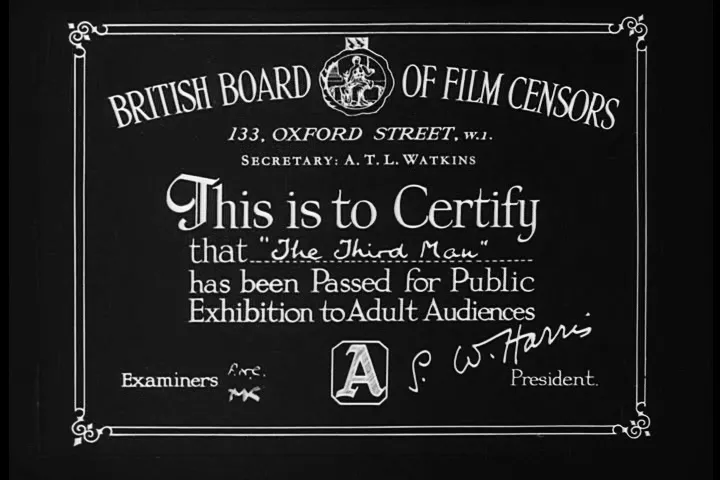
After the Last Frame: Why the Credits Deserve Their Place
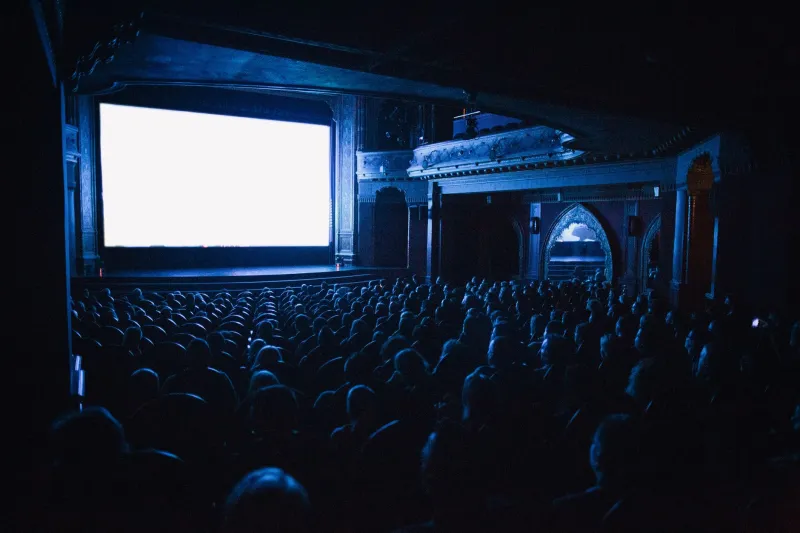
The house lights rise while the final card is still on screen. At home, the image contracts to a quarter of the frame and a trailer for something else takes the rest, while a voice explains what is coming next. Nobody ever formally decided that end credits were worthless. It simply became convenient to behave as though they were.
The quiet choreography of dismissal
Look at the techniques now standard across British television and the major streaming platforms. On broadcast, credits are sped up, squeezed to one side, or buried beneath a continuity announcement that starts before the score has finished its sentence. On demand, they are minimised automatically, and the next episode begins counting down from ten with the soft insistence of a lift door. At the cinema, the lights come up and the staff move in, which is as clear a signal as any that the film has ended and you should not linger.
Each of these is a small thing. Together they amount to a settled position: that the credits are administrative residue, a receipt rather than a work.
A record of labour, and of craft
The case against is easy to state. Credits are long. They are full of names nobody knows. They were once shorter, and nobody complained.
The answer is that the crawl is the only place where a feature film tells the truth about how it was made. The director and the leads are on the poster. The gaffer, the focus puller, the standby carpenter, the colourist who graded the final reel, the negative cutter, the chaperone, the dialect coach, the lawyer who cleared the music, the driver who moved the unit at four in the morning — these people exist in the credits and, for the most part, nowhere else at all.
There is also the matter of what the credits record beyond personnel: the dedication, the in-memoriam card, the acknowledgement of a location or a crew member who did not live to see the finished work. These are not decoration. They are part of how a film understands itself, and they are placed at the end because that is where the film has decided to put them.
The last movement of the score
It is worth remembering how often the final cue is the best thing a composer writes. A score that has spent two hours building and withholding gets, over the crawl, its chance to resolve — to restate a theme in a different key, to let an instrument finish a phrase it began in the opening reel. Some of the most affecting music in cinema was written specifically to play over names.
To cut that away, or to talk across it, is not housekeeping. It is editing the film after its makers have finished editing it.
The exception that proves nothing good
It is sometimes said, in defence of the skip button, that audiences will sit if there is a reason to sit. The post-credit scene is offered as evidence: put something at the end and people will stay for it.
But that is conditional attention, an incentive rather than a habit of respect. It teaches viewers to endure the credits in case of a reward, which is a different thing from regarding them as belonging to the work. The most disciplined audience in the world, in this respect, is the one waiting for a trailer — and it is not watching the film.
What a proper view actually requires
None of this demands solemnity. It demands a small amount of room. A cinema that holds the lights for the duration of the crawl, and does not send anyone in with a bin bag, costs almost nothing and signals that the film has not yet finished. A broadcaster that lets the credits run at their proper speed, and puts the promotion after them rather than over them, would lose perhaps ninety seconds of trailering and gain a reputation for caring about the work it shows.
Streaming platforms, meanwhile, could take one obvious step: offer a full-frame credits sequence as the default and make the shrink-and-autoplay an option rather than an imposition. The technology already exists. It is used everywhere else in the interface; it simply is not used here, because the incentive runs the other way.
And viewers can decide, individually, to stay. Not out of piety, and not for a bonus scene, but because the film was built to end this way — with the image receding, the music resolving and a list of names scrolling past as the last thing it has to say about itself.
The credits are part of the film. Give them the ninety seconds they were given by the people who made them.
A closing note on the exit
There is a particular pleasure in leaving a screening at the point the crawl ends rather than the moment the picture fades: the sense of having been walked out of the fiction rather than ejected from it. British cinemas used to understand this. Some independent venues still do. It would not take much for the rest to remember.