Before the Title Card: The Quiet Erosion of Television's Opening Ritual

Photo by Photo by Nick Fewings on Unsplash on Unsplash
There was a period in British television when the opening title sequence did more than fill the gap between the end of the news and the start of the drama. It was a threshold. The music began, the graphics assembled, and the viewer was invited to cross from one register of attention to another. That threshold has been quietly dismantled. In 2026, the default experience of watching a new series is to be offered a button that removes the introduction altogether, and to accept it without much thought.
The economics of the cold open
Streaming platforms did not invent the cold open, but they have made it the organising principle of modern television. A pre-titles scene offers immediate narrative momentum, a hook before the viewer's attention can drift. It also travels well. A short, dialogue-led opening needs less translation than a title sequence built around a song, a visual motif or a national reference. For British producers working with international partners, that logic is difficult to ignore.
The industrial pressures do not stop there. Shorter episode orders, often six or eight parts rather than a traditional British series of thirteen, reduce the need for a lengthy recap and a formal title card. Episodes are designed to be consumed in sequence, sometimes automatically. The opening sequence becomes friction. Platforms measure completion, engagement and drop-off, and a title sequence is easy to classify as delay rather than craft. The result is a gradual contraction: the forty-five-second overture becomes twenty seconds, then a sting, then a logo over the first scene.
A ritual, not a delay
The defence of the theme tune is not a defence of longueur. Some openings are indulgent, and some programmes are better served by a sudden plunge into action. But the best title sequences do narrative work that dialogue cannot easily replace. They establish register, place and period. They promise a particular kind of pleasure. The drums of EastEnders, the radiophonic unsettlement of Doctor Who, the pub piano of Coronation Street: these are not merely branding exercises. They are instructions for how to watch.
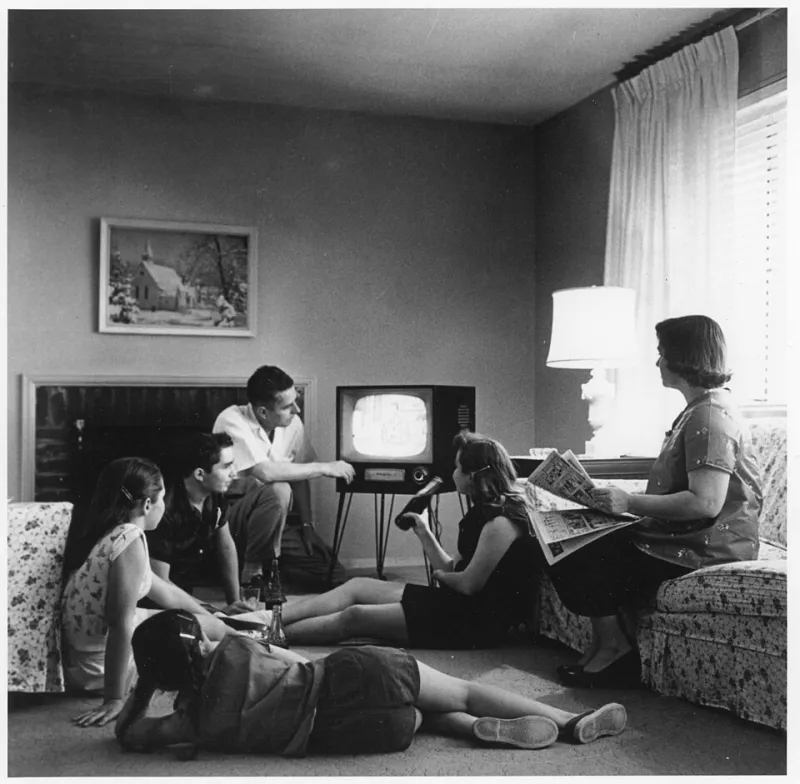
A theme tune also creates a shared moment. Appointment-to-view television depended on it. The music was a signal that the household should settle, that the kettle should be switched on, that the programme had begun. In an era of individual screens and staggered viewing, that collective function has weakened. The skip button is the logical expression of a private audience: each viewer decides when the programme really starts. What is lost is the small, communal recognition that a piece of television has announced itself.
What the skip button measures
The trouble with designing around the skip button is that it measures behaviour, not meaning. Viewers may skip an opening because they have seen it many times, because they are catching up on a train, or because the platform has trained them to expect immediate story. They may also skip it precisely because it is memorable but familiar. The data cannot distinguish between an opening that is disliked and one that has become part of the furniture.
In the UK, the pressure is felt across the ecology. Public service broadcasters still value distinctive title sequences, but they operate in a market where global streamers set the visual and rhythmic expectations. Independent production companies must satisfy co-financiers who want a series to feel at home in many territories. A strong British theme tune can be an asset, but it can also be seen as a local flourish in a format designed for export. The composer is commissioned late, asked for a short cue, and encouraged to make it versatile enough to be trimmed.
The cost to craft and memory
Title design is a specialist craft. It combines music, typography, animation and editing, and it has produced some of television's most distinctive work. When openings are reduced to a logo, that craft loses a regular outlet. Composers lose the chance to write a piece of music with its own shape, rather than a series of cues designed to sit under dialogue. The loss is not only aesthetic. It narrows the emotional vocabulary of television.
It also weakens memory. A theme tune is a mnemonic. It helps viewers locate a programme in time, mood and channel. It can be hummed, misremembered and parodied. That kind of cultural traction is difficult to manufacture, and it is easily lost when every programme begins with the same hurried plunge into plot. The irony is that platforms crave distinctive titles, because distinctive titles are hard to skip in the memory even when they are easy to skip on screen.
A modest defence of the overture
Not every programme needs a full overture. A cold open can be the right choice for a thriller, a comedy or a drama that wants to disorient the viewer. But the default should not be zero. British television could usefully treat the title sequence as part of the episode rather than as a marketing interruption. That means commissioning composers properly, allowing a sequence to breathe where it suits the tone, and resisting the assumption that brevity is always modern.
The opening title was never just a delay before the real thing. It was the moment television said what it was and asked the viewer to come in. A medium that no longer bothers to introduce itself should not be surprised when viewers treat it as content to be skipped.