Someone to Hand You the Evening: The Case for the Continuity Announcer
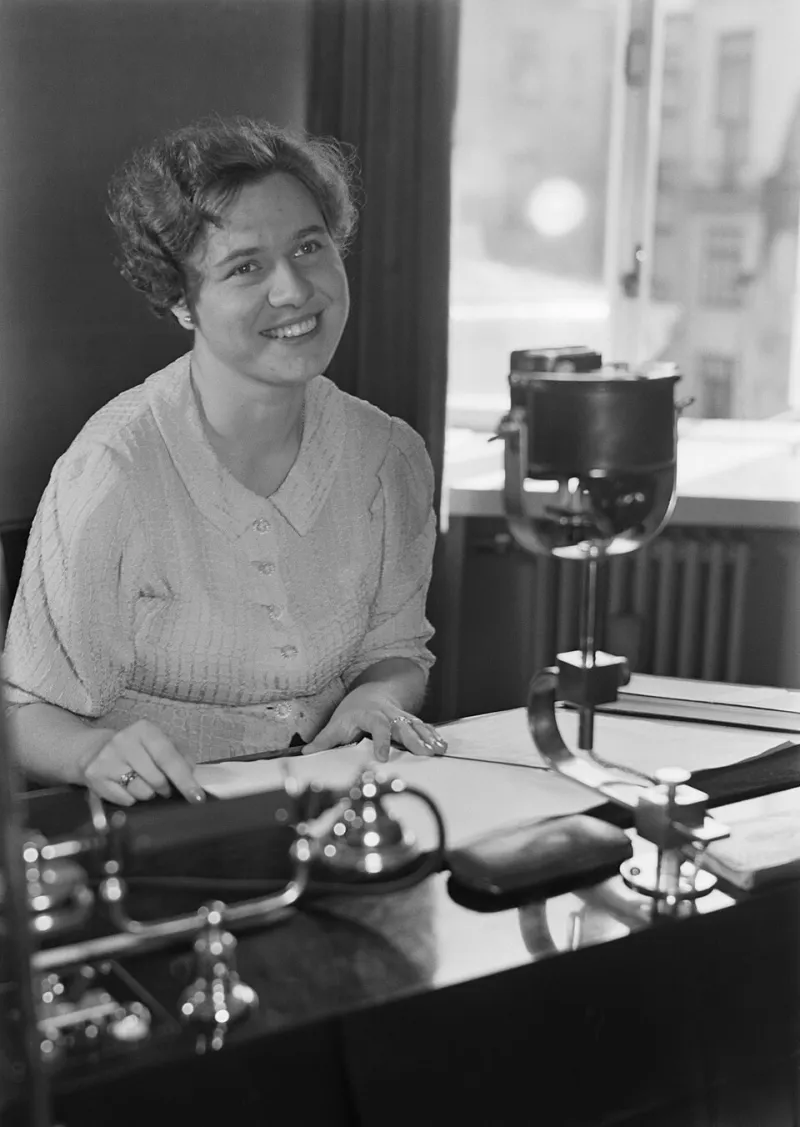
Photo: Yle Archives - Yle Arkisto, Public domain, via Wikimedia Commons
At 8.59 on a weekday evening, before the programme begins, there is a voice. It does not belong to the drama, the documentary or the advertisement break. It belongs to someone we do not see, who tells us what is about to happen and, in doing so, hands us the evening. The continuity announcer is among the least celebrated figures in British television, and among the most revealing.
The role is simple to describe and difficult to defend without sounding sentimental. An announcer speaks between programmes. They introduce, summarise, warn, apologise, and fill the small gaps that scheduling creates. They are, in the popular imagination, a joke about regional accents and falling standards. Yet the joke is itself a form of recognition. We notice the voice because it is one of the few remaining parts of television that addresses us directly, as viewers, rather than as users.
A Small Ceremony at the Junction
British television has long been organised around junctions. The end of one programme and the start of another is not a neutral gap; it is a threshold. The announcer stands at that threshold. Their voice marks the transition from one world to the next, and in doing so gives the schedule a shape that the menu screen cannot replicate.
This is not a matter of grandeur. The announcer is not a master of ceremonies, and the best of them would resist the description. But they perform a small ceremony nonetheless. They tell us what we are watching, when it will end, and what follows. They provide a frame. In an evening of viewing, that frame is the difference between a sequence of programmes and a night that has been arranged.
The Work of the Voice
The announcer's tasks are practical, and their value is often practical too. A warning about flashing images, a note about strong language, an apology for a technical fault: these are acts of care, delivered in a human register. The voice is not simply informational. It sets tone. A calm voice before a thriller, a warmer voice before a comedy, a sober voice before the news: each prepares the viewer for what is to come.
The voice also provides context. It can tell us that a programme is a repeat, a final episode, a departure from the usual schedule. It can explain why the evening looks different. In regional broadcasting, the voice has historically been local, a reminder that television is not only national but also situated. The announcer who speaks to a region is speaking from somewhere, and that sense of place is part of what British television has meant.
The announcer is, in this sense, a host. Not the host of a programme, but the host of the evening. They do not demand attention, and they do not compete with the programme. They simply make the arrangements audible.
The Silence of the Menu
Streaming has removed the junction, or rather it has privatised it. The viewer moves from one programme to another through a menu, an autoplay countdown, or a recommendation. The transition is personal, and it is silent. No one hands you the evening. You assemble it yourself.
There are obvious advantages to this. Choice is greater, and the viewer is not beholden to a scheduler. But the silence is not neutral. It changes the texture of viewing. A menu is a list; a schedule is an arrangement. The announcer is the human interface of that arrangement, and when they disappear, television becomes a library rather than an evening.
The loss is not only aesthetic. The voice between programmes is a shared point of reference. It tells us that others are watching at the same time, and that the evening has a common shape. That is not nostalgia for a golden age; it is a description of how scheduled television works. The announcer is one of the mechanisms by which a broadcast feels like an occasion rather than a transaction.
The Question of Occasion
An occasion requires framing. A wedding is not only a ceremony; it is a ceremony that has been announced, arranged and witnessed. Television is less grand, but the principle is similar. The announcer frames the evening. They say, in effect: this is here, now, and it is for you and for others.
Mockery of the announcer is often affectionate, but it can also be a way of avoiding the question of what the role does. The voice is easy to parody because it is formal, repetitive and slightly absurd. Yet the same could be said of many rituals that hold a schedule together. The proper view is not to insist that the announcer is an artist. It is to recognise that the role is a craft, and that crafts can be modest without being trivial.
What Remains
Continuity announcing has been reduced in many places to pre-recorded links, centralised booths and trailer voiceovers. The in-vision announcers of regional television are largely history. Where the role survives, it survives in a thinner form. That is not a reason to mourn excessively, but it is a reason to notice what is being lost.
A proper view of television should account for the small human interval. The announcer is not decoration. They are the sound of a schedule being kept, and of an evening being handed over. When that voice goes, the silence that remains is not empty. It is the sound of a medium that has stopped arranging itself for us, and left us to arrange it alone.